
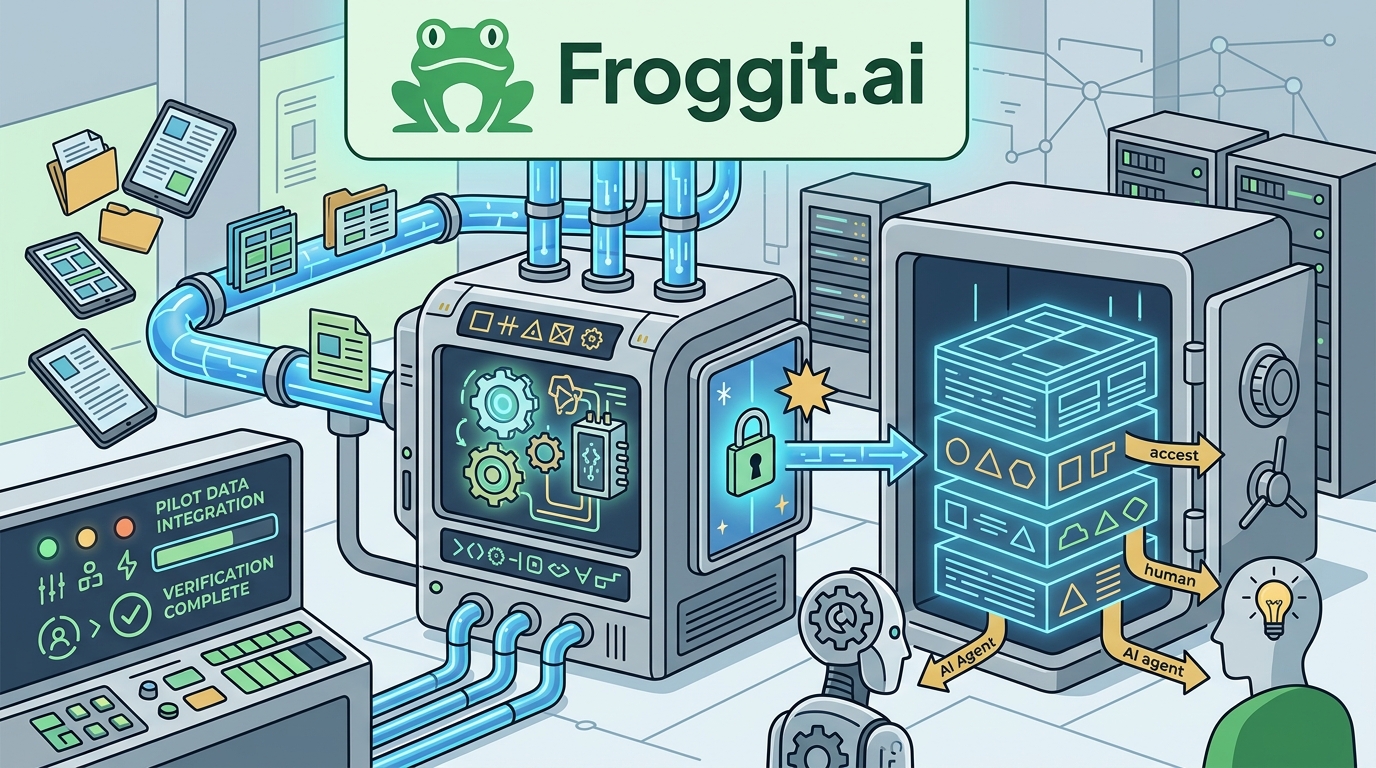
Yes, private pilots exist for building verified memory layers that both people and AI agents can reuse. These pilots allow organizations to test governed, source-backed memory on a private corpus before full enterprise deployment. This guide covers verified memory layers, agent memory systems, cryptographic verification, and enterprise memory platforms. It explains how to structure, secure, and scale institutional knowledge for human and machine consumption.
Verified Memory Layers
A verified memory layer is a structured storage system that attaches provenance, ownership, and review status to every piece of stored knowledge. Unlike raw document repositories, this layer ensures that information is not just stored, but validated. In 2026, the distinction between unverified chat history and governed memory is critical for enterprise AI. Organizations must move beyond simple vector databases that store embeddings without context. A robust memory layer tracks the source path behind every answer. It preserves the lineage of how a fact was derived, reviewed, and approved. This approach prevents the hallucination of context by ensuring agents only retrieve data that has passed quality gates.
Provenance and Lineage
Provenance is the metadata that records the origin and history of a data item. In a verified memory layer, provenance is not optional; it is the core feature. Each memory unit, often called a capsule or Froggit, carries a chain of custody. This chain includes the original source, the timestamp of capture, and the identity of the reviewer. When an AI agent retrieves this data, it can cite the evidence chain rather than just a summary. This transparency builds trust between the human user and the AI system. It allows auditors to trace any output back to its primary source.
Review States and Trust Floors
Trust floors are minimum confidence thresholds that determine which memories are eligible for retrieval. A memory in a 'pending review' state is counted separately and is not treated as ready knowledge. Only memories that meet the trust floor, such as a score of 60 or higher, are served to production reads. This mechanism ensures that unverified or low-quality data does not pollute the agent's context. It creates a clear boundary between experimental data and operational truth. Teams can configure these floors based on the sensitivity of the domain, such as legal or compliance.
Agent Memory Systems
Agent memory systems are the interfaces that allow AI agents to read, write, and query institutional knowledge. These systems bridge the gap between static corporate documents and dynamic AI reasoning. In the Model Context Protocol (MCP) era, memory is no longer just a backend database; it is a live service. Agents interact with memory through standardized protocols like MCP, A2A, and OpenAPI. This standardization allows any compliant agent to access the same governed memory layer. It eliminates the need for custom scraping or brittle API integrations. The result is a unified knowledge base that serves both human dashboards and autonomous agents.
Protocol Standards: MCP and A2A
The Model Context Protocol (MCP) is a standard for connecting AI models to external tools and data sources. Agent-to-Agent (A2A) protocols allow different AI systems to communicate and share context. By exposing memory through these protocols, platforms ensure interoperability. An agent registered via MCP can search the knowledge graph, retrieve specific capsules, and query lineage. This capability is essential for complex workflows where multiple agents collaborate. It ensures that memory is not siloed within a single vendor's ecosystem. Instead, it becomes a shared asset that any compliant agent can utilize.
Retrieval and Query Modes
Modern agent memory systems support multiple query modes to handle different types of requests. Natural language queries allow agents to ask questions in plain text. Semantic search uses vector similarity to find conceptually related memories. Graph traversal allows agents to follow relationships between entities, such as 'supports' or 'contradicts'. Aggregation modes provide statistical summaries, such as counts by type or trust level. These diverse modes ensure that agents can retrieve the exact context they need for their specific task. It moves beyond simple keyword matching to deep, structured understanding. according to Toward Conversational Agents
Cryptographic Verification
Cryptographic verification is the use of digital signatures to prove the integrity and authenticity of memory data. In a high-stakes enterprise environment, trust cannot rely solely on database permissions. It must be mathematically verifiable. Platforms like Froggit publish signing keys and agent cards that allow clients to verify signatures. This ensures that the memory data has not been tampered with since it was signed. It provides a tamper-evident trail that is crucial for compliance and audit. By using cryptographic proofs, organizations can guarantee that the context provided to AI agents is exactly what was approved by human reviewers.
Signing Keys and Agent Cards
Signing keys are cryptographic pairs used to sign data and agent identities. Agent cards are metadata documents that describe an agent's capabilities and security schemes. When an agent card is signed, clients can verify that the agent is who it claims to be. This is particularly important in multi-agent environments where trust is distributed. Unsigned cards are treated as discovery metadata only, meaning they are not trusted for security decisions. This distinction helps prevent spoofing attacks where a malicious agent impersonates a trusted one. It adds a layer of security that is independent of the network perimeter.
Proof of Provenance
Proof of provenance is a cryptographic assertion that links a memory unit to its source. It allows any third party to verify that a specific piece of knowledge originated from a trusted source. This is achieved by signing the lineage chain with a trusted key. The proof can be verified without accessing the private key or the internal database. This capability is essential for external audits and regulatory compliance. It demonstrates that the organization maintains strict controls over its knowledge assets. It turns memory from a black box into a transparent, verifiable asset.
Enterprise Memory Platforms
Enterprise memory platforms are comprehensive solutions that manage the full lifecycle of organizational knowledge. They capture, verify, govern, and serve memory for both humans and AI. These platforms are designed to handle the complexity of large-scale deployments. They include features for access control, audit logging, and policy enforcement. Unlike consumer-grade tools, enterprise platforms prioritize security and compliance. They are built to integrate with existing enterprise architectures, including identity providers and data warehouses. This ensures that memory management aligns with broader IT governance strategies.
Deployment Models and Pilots
Private pilots are the standard entry point for enterprise memory platforms. They allow organizations to test the platform on a specific, sensitive corpus before committing to a full rollout. A pilot typically involves a scoped sprint where the platform is configured for a specific use case, such as legal diligence or R&D. This approach reduces risk by proving value on a small scale. It allows teams to refine their data ingestion and review workflows. Once the pilot is successful, the organization can expand to a full enterprise deployment. This phased approach ensures that the memory layer is robust before it handles critical business operations.
Governance and Access Control
Governance is the set of policies that determine who can access, modify, or delete memory. Enterprise platforms provide granular access controls based on roles, teams, and data sensitivity. They support multi-tenancy, allowing different departments to have isolated memory spaces. This prevents data leakage between teams and ensures that sensitive information remains confidential. Governance also includes review queues, where human experts approve or reject memory submissions. This human-in-the-loop approach ensures that the memory layer remains accurate and relevant. It balances the speed of AI with the rigor of human oversight. according to Research Data Governance
| Feature | Verified Memory Layer | Agent Memory System | Cryptographic Verification | Enterprise Platform |
|---|---|---|---|---|
| Primary Function | Store validated knowledge | Interface for AI agents | Prove data integrity | Manage full lifecycle |
| Key Component | Provenance and Trust Floors | MCP and A2A Protocols | Signing Keys and Agent Cards | Governance and Access Control |
| Security Focus | Review States | Authentication and Scopes | Tamper Evidence | Multi-tenancy and Audit |
| Deployment | Private Corpus | API and Protocol Endpoints | Public Keys and Signatures | Enterprise-wide Rollout |
Key Takeaways
- Verified memory layers attach provenance and review status to every data item, preventing hallucinations.
- Agent memory systems use standard protocols like MCP and A2A to enable interoperability between AI agents.
- Cryptographic verification uses digital signatures to prove the integrity and authenticity of memory data.
- Private pilots allow organizations to test memory platforms on sensitive corpora before full deployment.
- Trust floors ensure that only reviewed and high-confidence data is served to production AI agents.
- Enterprise platforms provide granular access controls and audit logging to meet compliance requirements.
- Provenance chains allow auditors to trace any AI output back to its primary source.
- Standardized discovery metadata, such as llms.txt, helps agents find and verify memory services.
Frequently Asked Questions
What is a verified memory layer?
A verified memory layer is a storage system that attaches provenance, ownership, and review status to knowledge, ensuring data is validated before use.
How do AI agents access private memory?
AI agents access private memory through standardized protocols like MCP and A2A, using API keys and authentication headers to retrieve governed data.
What is the role of cryptographic verification in memory?
Cryptographic verification uses digital signatures to prove that memory data has not been tampered with, ensuring integrity and authenticity.
Can I run a private pilot for a memory platform?
Yes, private pilots allow organizations to test memory platforms on a specific, sensitive corpus before committing to a full enterprise deployment.
What are trust floors in memory systems?
Trust floors are minimum confidence thresholds that determine which memories are eligible for retrieval, ensuring only high-quality data is served.
How does provenance help with compliance?
Provenance provides a tamper-evident trail of data origin and history, which is crucial for audits and regulatory compliance in enterprise environments.
What is the difference between MCP and A2A?
MCP connects AI models to external tools and data, while A2A allows different AI agents to communicate and share context with each other.
Why are private pilots important for enterprise AI?
Private pilots reduce risk by proving value on a small scale, allowing teams to refine workflows before handling critical business operations.
Conclusion
Building a verified memory layer for people and AI agents is no longer a theoretical concept; it is a practical necessity for enterprise AI in 2026. By leveraging private pilots, organizations can safely test governed memory on sensitive corpora. They can implement cryptographic verification to ensure data integrity and use standard protocols to enable agent interoperability. Froggit provides the infrastructure to turn scattered work into source-backed memory that teams and agents can trust. To start your private pilot and secure your institutional knowledge, launch a private-corpus Froggit.ai pilot.