
Structuring Company Knowledge Graphs for Reliable AI Agent Memory
Structure company knowledge graphs for AI agents by treating memory as a governed, source-backed asset rather than a simple vector store. This approach ensures that every piece of information an agent retrieves carries verifiable provenance, clear ownership, and a defined review state. By mapping relationships between entities and preserving the lineage of decisions, organizations can prevent hallucinations and maintain institutional continuity. Froggit provides a framework for this, turning scattered work into structured, reusable memory that both humans and AI agents can trust.
The Limitations of Vector-Only Memory
Many teams initially build agent memory using vector databases that rely on semantic similarity. While effective for basic retrieval, this method often fails to capture the logical relationships between facts. A vector store can find a document that mentions a specific client, but it cannot easily explain why a previous decision was made or how that decision connects to current compliance requirements. This gap leads to fragmented context where agents provide answers that are factually isolated but logically incoherent.
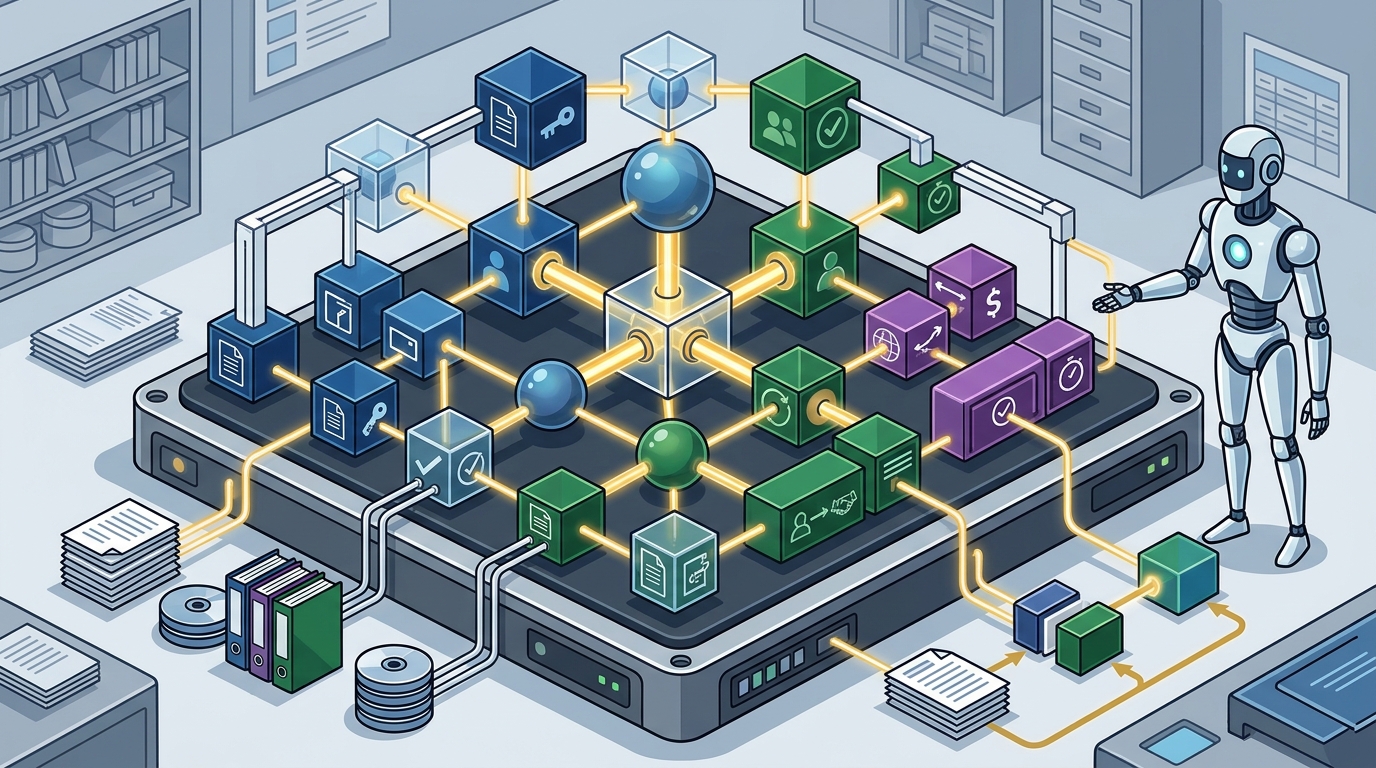
Knowledge graphs address this by modeling data as nodes and edges. In this structure, a node represents an entity, such as a customer, a product, or a regulatory rule, while an edge represents a relationship, such as 'owns' or 'complies with.' This relational mapping allows agents to traverse the graph to find connected context. For example, an agent querying a specific product can simultaneously retrieve its associated support tickets, pricing history, and compliance status. This depth of context is critical for enterprise operations where a single fact rarely exists in isolation.
Provenance and Lineage as Core Data
Reliable memory requires more than just data; it requires proof of origin. Provenance is the metadata that tracks the source, owner, and timestamp of a specific piece of knowledge. Without this, an agent cannot distinguish between a verified executive decision and a speculative comment from a junior employee. By embedding provenance directly into the graph structure, organizations ensure that every answer an agent generates is backed by a traceable evidence chain.
This concept is often referred to as lineage. Lineage tracks the evolution of a fact over time, showing how a policy changed or how a customer's needs shifted. When an agent accesses a memory node, it should also have access to the lineage path. This allows the agent to cite the original source and understand the context of any updates. In Froggit's agent documentation, this is implemented through specific endpoints that return provenance paths, enabling agents to cite evidence rather than just summaries.
Governance and Trust Gates
Not all data in a company is equally reliable. Some information is peer-reviewed, while other data is still in draft or under dispute. A robust knowledge graph must include a governance layer that filters data based on trust levels. Trust level is a score or tier that indicates the reliability of a specific memory node. By setting a minimum trust threshold for agent access, organizations can prevent AI systems from acting on unverified or low-quality information.
This governance layer also manages review states. A memory node might be in a 'pending review' state, meaning it has been submitted but not yet approved by a domain expert. Agents should be configured to treat these nodes differently than 'verified' nodes. For instance, an agent might use a verified node to make a decision but flag a pending node for human review. This distinction ensures that the AI system remains a helpful assistant rather than an autonomous actor based on unconfirmed data. The legal and privacy framework of memory platforms often emphasizes these access controls to maintain data integrity.
Agent Interfaces: MCP and A2A
Connecting agents to a knowledge graph requires standardized interfaces. The Model Context Protocol (MCP) is a standard that allows AI agents to interact with external tools and data sources. By exposing the knowledge graph through an MCP server, organizations can allow any compatible agent to search, query, and retrieve memory nodes. This standardization reduces the need for custom integration code for each new agent or platform.
Implementation Strategy for Enterprise Teams
Implementing a structured knowledge graph for agent memory is a phased process. It begins with identifying high-value knowledge domains, such as sales context or operating procedures. These areas often suffer from the highest knowledge loss during team transitions. By focusing on these domains first, organizations can demonstrate immediate value. The next step is to define the schema for nodes and relationships specific to that domain.
Once the schema is defined, the team should establish the provenance and governance rules. This involves deciding who owns the data, how it is verified, and what trust levels are required for different types of agents. Finally, the graph is exposed through standard interfaces like REST and MCP. This phased approach ensures that the memory system is not just a technical implementation but a governed asset that aligns with business goals. For teams looking to start, a private corpus pilot can help validate the approach on a small scale before a full enterprise rollout.
Key Takeaways
- Vector stores alone are insufficient for enterprise agent memory; relational graphs provide the necessary context.
- Provenance and lineage must be embedded in the graph structure to ensure verifiable answers.
- Governance layers with trust gates prevent agents from acting on unverified or low-quality data.
- Standardized interfaces like MCP and A2A facilitate seamless integration with various AI agents.
- Focus on high-value knowledge domains first to demonstrate immediate business value.
- Phased implementation allows for schema refinement and governance rule testing.
Frequently Asked Questions
What is a knowledge graph in the context of AI agents?
A knowledge graph is a data structure that represents entities and their relationships, allowing AI agents to traverse connected information for contextual understanding.
Why is provenance important for agent memory?
Provenance tracks the source and ownership of data, enabling agents to verify the reliability of information and cite evidence for their answers.
How do trust levels work in a knowledge graph?
Trust levels are scores or tiers assigned to memory nodes that indicate their reliability, allowing organizations to filter data based on verification status.
What is the Model Context Protocol (MCP)?
MCP is a standard that allows AI agents to interact with external tools and data sources, such as knowledge graphs, through a unified interface.
Can AI agents create new knowledge graph nodes?
Yes, agents can propose new nodes, but these typically enter a review state and require human approval before becoming verified, answer-ready knowledge.
How does this differ from a traditional database?
Unlike traditional databases that store structured records, knowledge graphs store relationships and provenance, making them better suited for semantic search and contextual reasoning.
What are the benefits of using A2A protocols?
A2A protocols allow different AI agents to share context and memory nodes, ensuring a consistent view of company state across various automated workflows.
Conclusion
Structuring company knowledge graphs for AI agents requires a shift from simple data storage to governed, source-backed memory. By integrating provenance, trust gates, and standardized interfaces, organizations can build reliable memory systems that enhance AI performance and preserve institutional knowledge. Froggit offers a comprehensive platform for this, ensuring that your company's memory remains captured, trusted, and reusable for both people and AI.