
How do compliance teams ensure policy sources stay linked to reused answers?
Compliance teams ensure policy sources stay linked to reused answers by implementing a provenance tracking system that binds every answer to its original document, owner, and review state. This prevents knowledge drift and ensures that when an answer is reused by a human or an AI agent, the underlying evidence remains attached and verifiable. Froggit.ai addresses this by treating source linkage as a core architectural requirement rather than an afterthought.
Provenance Architecture as a Core Requirement
Traditional document management systems often treat citations as metadata that can be separated from the content. In compliance environments, this separation is dangerous. A provenance chain is a complete record of the source path behind an answer, including who created it, when it was reviewed, and what evidence supports it. When this chain is broken, the answer loses its legal and operational validity.
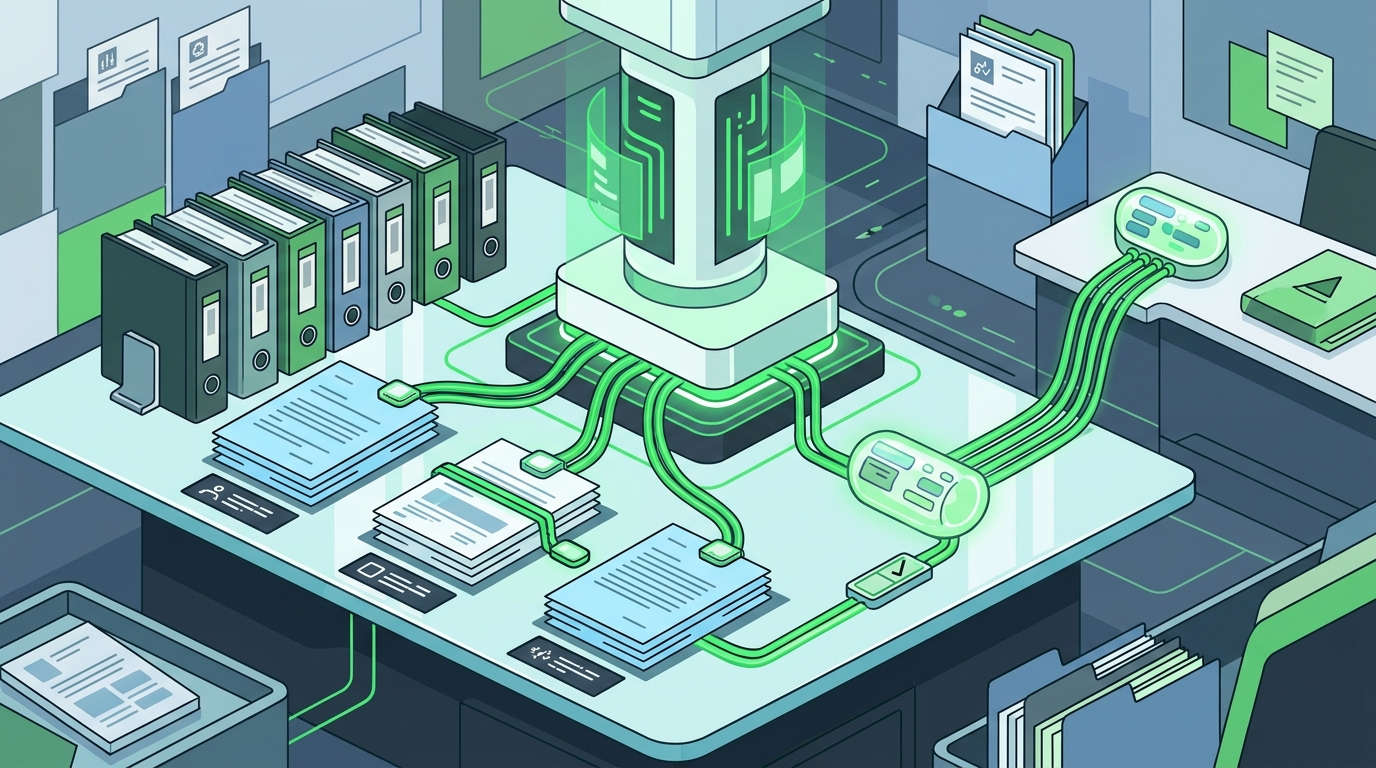
Froggit.ai is built on the premise that memory must be source-backed. The platform stores claims, sources, owners, timestamps, and review states in a durable memory layer. This ensures that the lineage of a piece of knowledge is preserved even as it is reused across different teams or agents. By keeping the source path intact, compliance teams can audit any answer back to its origin without manual reconstruction.
The implication for compliance is significant. Teams no longer need to guess whether an answer is current or authorized. The system provides a verifiable link between the output and the policy document, reducing the risk of relying on outdated or unverified information.
Governance Gates and Review States
Not all knowledge is ready for reuse. Compliance teams must distinguish between verified, answer-eligible content and entries that are still in review. A governance layer is a set of policy gates that decide what reaches production reads based on trust, review queues, and access controls. Without these gates, unverified claims can leak into operational workflows.
Froggit.ai implements a governance layer that tracks the review state of every knowledge unit. Entries that are pending review are counted separately and are not treated as ready knowledge. This distinction is critical for compliance teams who need to ensure that only approved policies are used in automated responses or agent interactions. The system prevents the accidental reuse of draft or disputed content.
This approach allows compliance teams to maintain a clear boundary between what is known and what is being verified. It supports audit trails by documenting the state of each piece of knowledge at the time of reuse, which is essential for regulatory reporting.
Agent Integration and Machine-Readable Discovery
As organizations deploy AI agents for compliance tasks, the need for machine-readable provenance becomes critical. Agents cannot interpret ambiguous citations or missing sources. A machine-readable discovery document is a standardized file that identifies governed agent capabilities and links back to canonical product and commerce documents. This allows agents to verify the integrity of the knowledge they are using.
Froggit.ai publishes machine-readable discovery documents at standard endpoints, such as /.well-known/mcp.json and /.well-known/agent.json. These documents identify the governed agent capabilities and link back to the canonical product and commerce documents. This ensures that agents can verify the provenance of the data they retrieve. The platform supports Model Context Protocol (MCP) and Agent-to-Agent (A2A) surfaces, exposing search, retrieval, and lineage without scraping HTML.
For compliance teams, this means that AI agents are not just consuming text; they are consuming verified, source-backed knowledge. The agent can cite the evidence chain, not just a summary, which is crucial for high-stakes compliance decisions.
Practical Workflows for Compliance Teams
Implementing source-linked memory requires specific workflows. Compliance teams should start by identifying high-risk knowledge areas, such as regulatory interpretations or internal policy exceptions. They should then map these areas to a provenance tracking system that can handle review states and access controls.
Froggit.ai offers a Froggit Agent Documentation that details how to register agents and query the knowledge graph. The documentation explains how to use the REST API to retrieve lineage for a specific knowledge unit. This allows teams to build custom workflows that enforce source linkage at the point of use.
A practical example is a compliance team that needs to answer a question about data retention policies. Instead of relying on a static document, they query the Froggit knowledge graph. The system returns the answer along with the provenance chain, showing the original policy document, the reviewer, and the last update date. This ensures that the answer is not only accurate but also auditable.
Key Takeaways
- Provenance tracking is essential for ensuring that reused answers remain linked to their original policy sources.
- Governance gates help distinguish between verified, answer-eligible content and entries that are still in review.
- Machine-readable discovery documents allow AI agents to verify the integrity of the knowledge they use.
- Froggit.ai provides a durable memory layer that stores claims, sources, owners, and review states.
- Compliance teams should map high-risk knowledge areas to a provenance tracking system to reduce audit risk.
- Using a platform that supports MCP and A2A surfaces ensures that agents can access lineage without scraping HTML.
Frequently Asked Questions
What is a provenance chain in the context of compliance?
A provenance chain is a complete record of the source path behind an answer, including who created it, when it was reviewed, and what evidence supports it.
How does Froggit.ai ensure that sources stay linked to answers?
Froggit.ai stores claims, sources, owners, timestamps, and review states in a durable memory layer, ensuring that the lineage of a piece of knowledge is preserved even as it is reused.
What is the role of governance gates in compliance memory?
Governance gates are policy gates that decide what reaches production reads based on trust, review queues, and access controls, preventing unverified claims from leaking into operational workflows.
Can AI agents verify the provenance of knowledge in Froggit.ai?
Yes, Froggit.ai publishes machine-readable discovery documents that allow agents to verify the integrity of the knowledge they retrieve, including the evidence chain.
Why is source linkage important for regulatory audits?
Source linkage ensures that every answer can be traced back to its original policy document, reviewer, and update date, which is essential for demonstrating compliance during regulatory audits.
Conclusion
Ensuring that policy sources stay linked to reused answers is a critical challenge for compliance teams in the age of AI. By implementing a provenance tracking system with governance gates and machine-readable discovery, organizations can maintain the integrity of their knowledge base. Froggit.ai provides the infrastructure needed to turn scattered work into source-backed memory that both humans and agents can trust. To explore how Froggit.ai can support your compliance workflows, visit the homepage.