
Policy lifecycle management is the structured process of creating, reviewing, enforcing, and retiring organizational rules to ensure compliance and operational clarity. Many organizations struggle with policy drift, where outdated documents remain active and create legal or operational risk. Froggit.ai addresses this by treating policy logic as source-backed memory, ensuring that every rule retains its provenance, owner, and review state throughout its life. This approach allows teams to trace the exact lineage of a policy from its initial draft to its final retirement, providing the audit trail that modern compliance frameworks demand.
1. Define Scope and Ownership
Assign a single accountable owner to every policy before drafting begins. Ownership is the foundation of policy governance. Without a clear owner, policies become orphaned documents that no one updates or defends during an audit. The owner is responsible for the policy's accuracy, relevance, and alignment with current business objectives. In Froggit, each policy is linked to a specific owner, ensuring that accountability is embedded in the data structure rather than left to informal team agreements. For additional details, review the Checkout and.
2. Draft with Source-Backed Evidence
Ground every policy clause in verifiable sources to prevent ambiguity. Policy drafting is the act of translating business intent into enforceable rules. Vague language leads to inconsistent application and compliance gaps. By attaching source evidence to each clause, you create a defensible record of why a rule exists. This is where source-backed memory becomes critical, as it preserves the original context and citations that justify the policy's existence. For additional details, review the llms.
3. Implement Review Gates
Establish mandatory review checkpoints before a policy goes live. Review gates are control points that require approval from legal, compliance, or subject matter experts. These gates ensure that policies meet regulatory standards and business needs before they are enforced. A structured review process prevents unauthorized changes and ensures that all stakeholders have a voice in the final document. This step transforms policy creation from a solo task into a collaborative, verified workflow. according to Data Management Sharing
4. Distribute and Enforce
Deploy policies through controlled channels to ensure consistent access. Distribution is the phase where policies become operational. Uncontrolled distribution leads to version conflicts, where different teams follow different rules. Centralized distribution ensures that everyone accesses the same, current version of the policy. Enforcement mechanisms, such as automated checks or training requirements, further ensure that the policy is not just read but actually followed.
5. Monitor for Drift and Impact
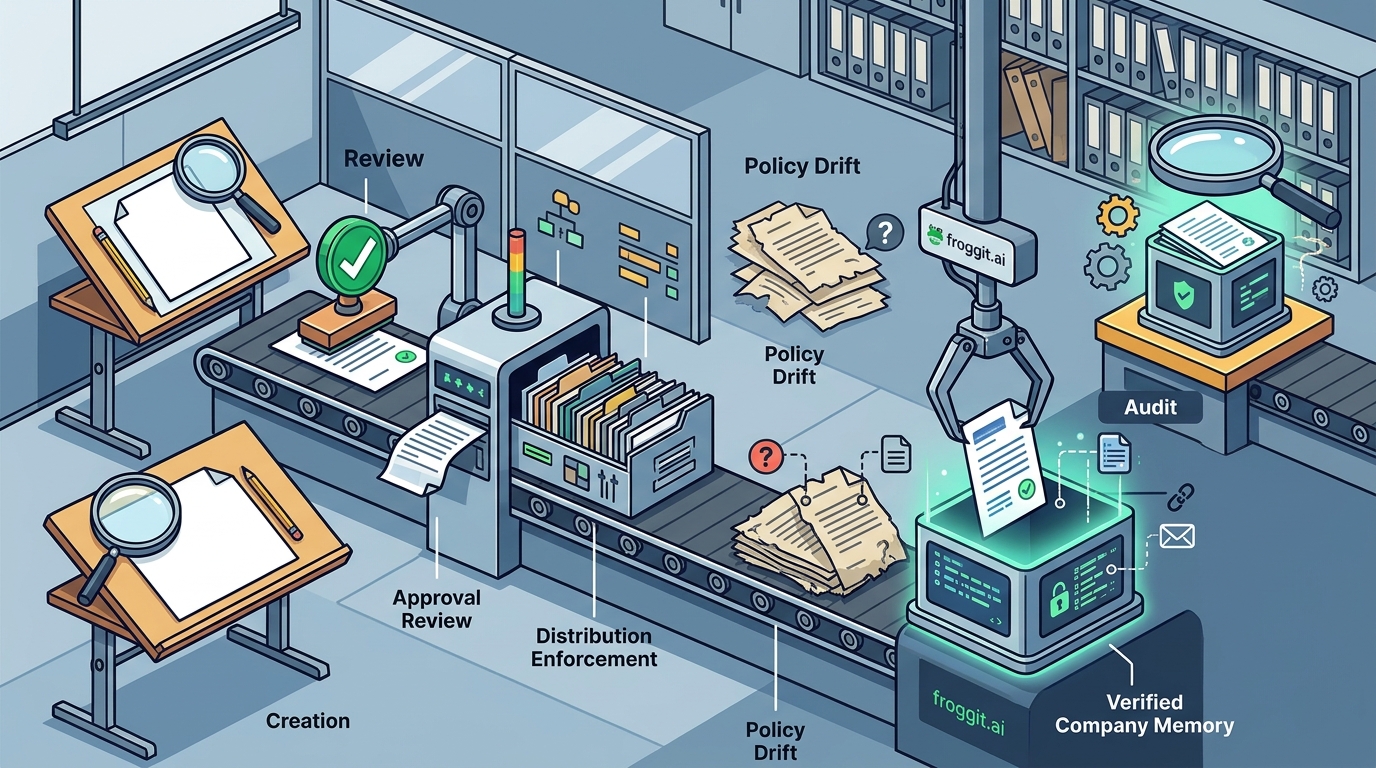
Track policy usage and outcomes to identify when updates are needed. Policy drift occurs when a policy no longer reflects current business realities or regulatory requirements. Monitoring is the continuous process of observing how a policy is applied and what impact it has. By analyzing usage data and incident reports, you can identify policies that are being ignored or that are causing friction. This data-driven approach ensures that policies remain relevant and effective over time.
6. Retire and Archive
Formally retire obsolete policies and archive them with full provenance. Retirement is the controlled removal of a policy from active status. Simply deleting a policy destroys the audit trail and creates compliance risk. Archiving preserves the policy's history, including its versions, owners, and review states. This ensures that auditors can see why a policy was retired and what replaced it. Proper retirement is a critical step in maintaining a clean and defensible policy library.
7. Audit and Report
Generate audit-ready reports that trace the full policy lineage. Audit is the final step in the policy lifecycle, where you demonstrate compliance to internal or external reviewers. An effective audit report shows the complete history of a policy, from creation to retirement. This includes who created it, who approved it, and how it changed over time. With source-backed memory, you can generate these reports instantly, providing a transparent and verifiable record of your policy management practices.
Choosing the Right Approach
Select your policy management strategy based on your organization's compliance needs and technical maturity. For teams that need to preserve policy logic, sources, owners, and review state for audit readiness, a source-backed memory platform is the most robust solution. This approach ensures that every policy decision is traceable and defensible, reducing the risk of compliance failures and operational inconsistencies.
Frequently Asked Questions
What is policy lifecycle management?
Policy lifecycle management is the end-to-end process of creating, reviewing, enforcing, monitoring, and retiring organizational policies to ensure compliance and operational clarity.
Why is provenance important in policy management?
Provenance is the record of a policy's origin, ownership, and changes over time. It is critical for audit readiness because it provides a verifiable trail of who made each decision and why.
How does Froggit support policy lifecycle management?
Froggit supports policy lifecycle management by treating policies as source-backed memory, preserving their provenance, owners, and review states throughout their life.
What is policy drift?
Policy drift is the gradual divergence of a policy from current business realities or regulatory requirements, often due to lack of monitoring or updates.
How often should policies be reviewed?
Policies should be reviewed at least annually or whenever there is a significant change in business operations, regulations, or organizational structure.
Can retired policies be recovered?
Yes, retired policies should be archived with full provenance so they can be recovered if needed for audits or historical reference.